

You downloaded Calm because someone told you to try meditating.
Or maybe it was the algorithm. Or your therapist. Or your well-meaning friend who swears by it.
Either way — you gave it a shot. And honestly? It's a beautiful app. The Sleep Stories are genuinely soothing. The ambient sounds are great for focus sessions. And that one 60-second breathing exercise has saved you from more than one spiraling moment.
But here's the thing: Calm was built for a general audience dealing with everyday stress. And ADHD isn't everyday stress. It's time blindness and rejection sensitivity and task paralysis and emotional flooding — and a brain that can find a 45-minute guided meditation both overstimulating and incredibly boring at the same time.
If you've been using Calm and thinking "this is nice, but it's not quite enough" — that's not a you problem. That's just what happens when a general wellness tool meets a brain that needs something more specific.
This article takes an honest look at what Calm does well, where it falls short for ADHD, and six alternatives that might fill in the gaps.
What Is Calm?
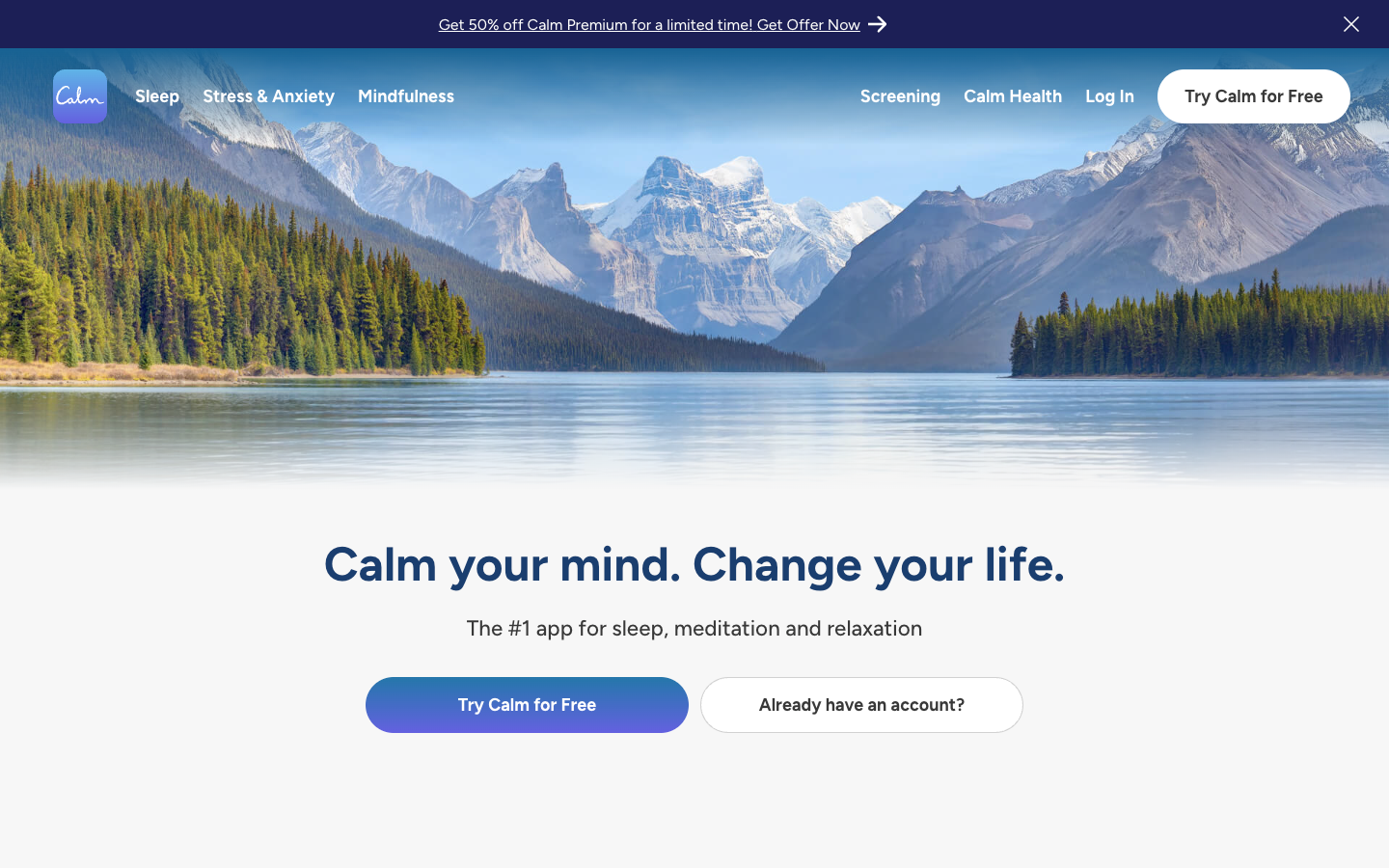
Calm is one of the most widely-used wellness apps in the world. It's focused on meditation, sleep support, and stress reduction — delivered mainly through audio. Sleep Stories, guided meditations, ambient soundscapes, and short daily sessions make up most of what's on offer.
At a glance:
- Best known for: Sleep Stories, ambient soundscapes, and guided meditations
- Main use case: Stress reduction, better sleep, general mindfulness
- Designed for: General adults — not built for ADHD specifically
- Pricing: From $69.99/year (iOS App Store). Web pricing may vary — some users report $79.99/year via Calm's website checkout. Check calm.com for current pricing in your region.
- Platforms: iOS, Android, Web, Apple Watch
Is Calm Good for ADHD?
Short answer: it depends on what you need it for.
Calm has real strengths for ADHD adults. It also has some structural limitations that show up pretty quickly — especially once the novelty wears off.
Where Calm actually helps
Sleep. This is where Calm genuinely shines for ADHD brains. Falling asleep is hard when your thoughts are racing through every conversation you had in 2017. Calm's Sleep Stories are designed to give your brain just enough to latch onto — a gentle voice, a quiet narrative — without demanding full attention. Many ADHD adults use Calm exclusively for this, and it works.
Background audio during focused work. Silence is actually under-stimulating for a lot of ADHD brains. The ambient soundscapes — rain, fire, white noise — give just enough sensory input to keep the brain online without pulling focus away from the task.
The Daily Calm. One session, already picked for you, no decisions required. For ADHD brains that lose 20 minutes to the paralysis of choosing what to listen to, this no-choice format matters more than it sounds.
Where it falls short for ADHD
It's passive. You listen. You relax. You close the app. Nothing transfers to the rest of your day. When the audio stops, the executive dysfunction is still there. The time blindness is still there. Calm soothes the surface — but it doesn't reach the patterns underneath.
The open library creates decision fatigue. Outside of the Daily Calm, you're navigating hundreds of sessions with no guided path. For ADHD brains that need structure to initiate action, an open catalogue creates exactly the friction it's supposed to remove.
No ADHD-specific framing. Calm doesn't know you have ADHD. It doesn't adapt. There's no content on rejection sensitivity, no acknowledgment of why sitting still is harder for some brains, no tools for task initiation or emotional dysregulation. It assumes you can just... relax. Which, if you have ADHD, you know is not always how it works.
Six Alternatives Worth Trying
1. Inflow — Built Specifically for ADHD
.png)
Here's the honest pitch: Inflow isn't trying to be Calm. It's not a meditation app or a relaxation tool. It's an ADHD-specific support app — one that was built around how ADHD brains actually work, rather than adapted from general wellness content.
Where Calm helps you decompress, Inflow helps you understand why decompressing is so hard in the first place — and what to do about it on the days when even breathing exercises feel like too much to ask.
The app is grounded in CBT (cognitive behavioral therapy) and structured around the specific challenges that come with ADHD: procrastination, emotional dysregulation, time blindness, rejection sensitivity, shame cycles. Not in a clinical, textbook way — in a genuinely accessible, bite-sized way that works for ADHD attention spans.
What's actually inside:
- Learning modules — short, daily, designed for ADHD brains. Not walls of text. Not 40-minute sessions. Bite-sized content you can actually finish.
- Interactive exercises — not passive listening. You engage, you apply, you build skills.
- Quinn, the AI support tool — available 24/7. If you're stuck in a shame spiral at 11pm or can't figure out how to start a task that should take five minutes, Quinn is there. It understands ADHD-specific challenges and gives evidence-based guidance — not generic advice.
- Virtual coworking rooms and drop-in focus sessions — live body doubling with other ADHD adults. This is one of the most underrated features. Sometimes you don't need a new strategy. You just need another human being present while you do the thing.
- Community — a message board-style space where ADHD adults connect, share, and support each other. The kind of "me too" validation that's genuinely hard to find elsewhere.
One more thing worth mentioning: Inflow has a 7-day free trial, and if you subscribe directly through their website, you can request a refund within 7 days of your first payment — as long as you haven't meaningfully used the app. That's a pretty low-risk way to find out if it's right for you.
Best for: ADHD adults who want more than relaxation — who want to actually understand their brain and build skills that hold on the hard days.
Pricing: From $0.33/day (billed annually) — roughly the cost of a coffee per week.
Platforms: iOS, Android.
Try it: Take Inflow's ADHD quiz to get started.
Inflow is a wellness app. It does not diagnose or treat ADHD and is not a replacement for therapy, medication, or professional clinical care.
2. Headspace — Structured Mindfulness with a Clear Path
Headspace is Calm's closest competitor — and for ADHD users, it has one meaningful advantage: structure. Where Calm drops you into an open library, Headspace gives you a sequence. Day 1, Day 2, onward. The decision is already made for you.
Its visual, animated teaching style also holds attention better than audio-only apps — which matters when your brain is looking for any excuse to check out.
Best for: ADHD adults who want to build a mindfulness habit but need step-by-step guidance rather than a catalogue to browse.
Considerations: Still not ADHD-specific. Streak mechanics can create shame when you miss days — which, with ADHD, you will.
Pricing: $12.99/month or $69.99/year.
Platforms: iOS, Android, Web.
3. Finch — Gentle Self-Care Without the Shame
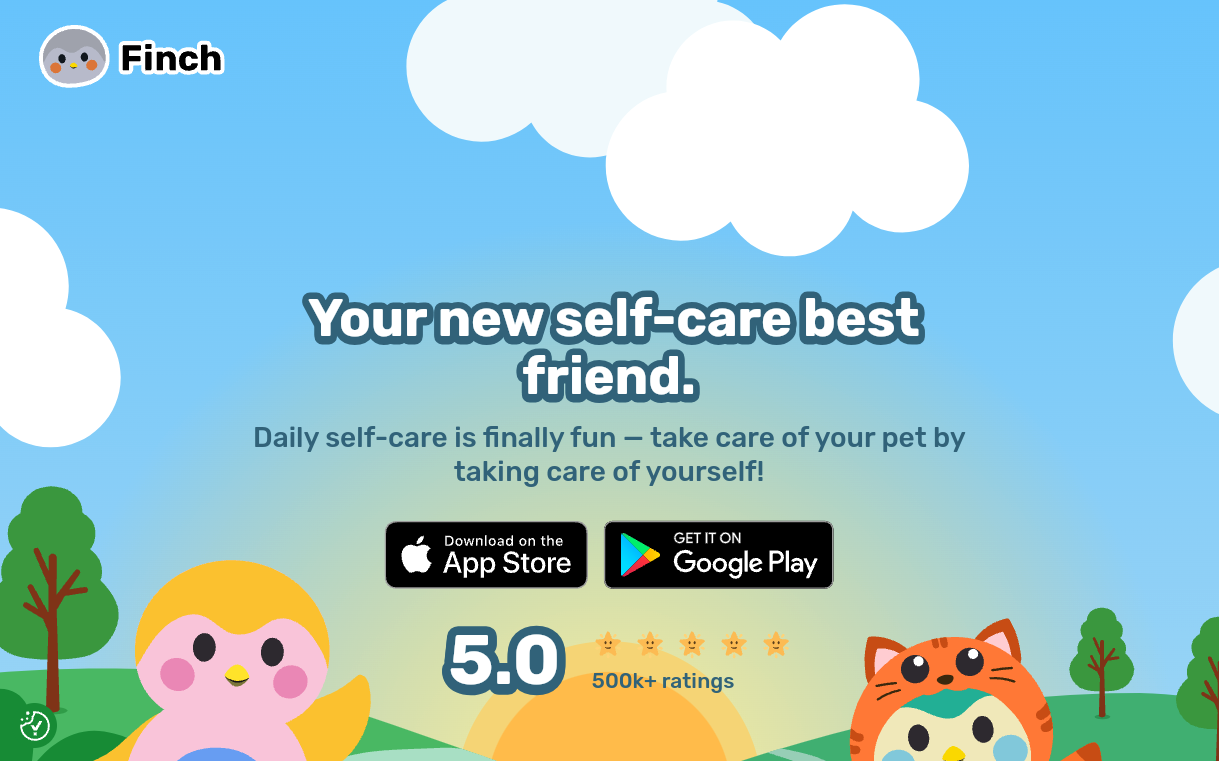
Finch is a self-care app built around a virtual pet bird. You complete small wellness goals to help your bird grow and travel. No streaks. No punishment for missing days. No performance standard to fall short of.
If you've ever built a habit streak, broken it, felt terrible, and then avoided the app for two weeks out of guilt — Finch is the reset button. It asks almost nothing of you and judges nothing.
Best for: ADHD adults who are burned out on productivity tools and need a zero-pressure starting point for daily self-care.
Considerations: Intentionally gentle and limited. Finch doesn't address executive function or ADHD patterns — it's a bridge, not a destination.
Pricing: Free core version. Finch Plus ~$69.99/year.
Platforms: iOS, Android.
4. Ten Percent Happier (Happier Meditation) — Mindfulness for Skeptics
Ten Percent Happier — now rebranded as Happier Meditation — takes a direct, secular, evidence-first approach to mindfulness. No soft gongs. No vague spiritual framing. Just honest, science-based content from neuroscientists and experienced teachers who openly acknowledge that your brain will wander — and treat that wandering as the practice, not the failure.
For ADHD adults who've been put off by the typical meditation app aesthetic, this one lands differently.
Best for: ADHD adults who want mindfulness content they can actually trust — and who respond better to directness than to atmosphere.
Considerations: Still a passive listening app. No ADHD-specific content. Large library can still create decision fatigue.
Pricing: ~$99.99/year.
Platforms: iOS, Android, Web.
5. Forest — Gamified Focus Timer
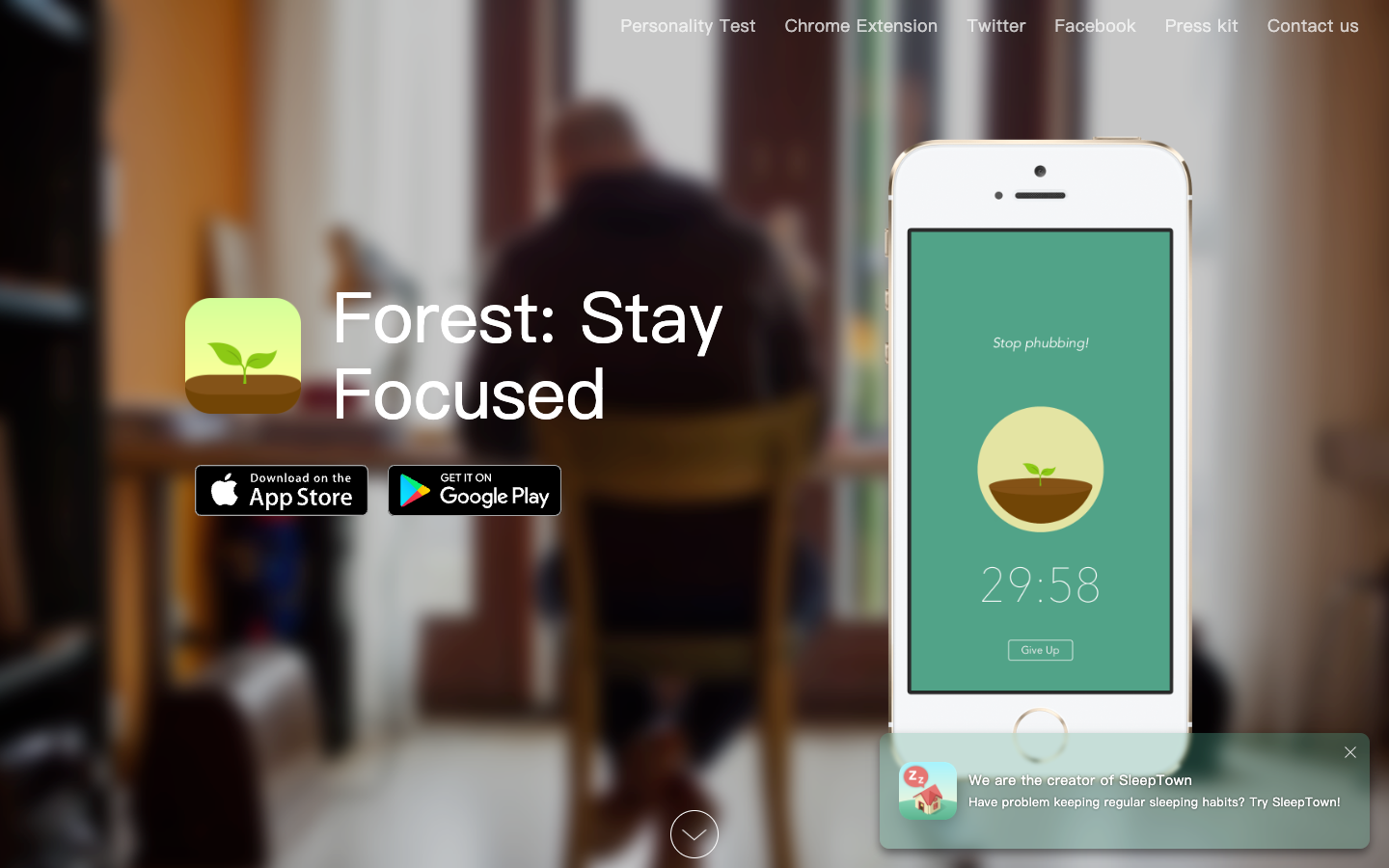
Forest uses one beautifully simple idea: plant a virtual tree when you need to focus. Leave the app to check social media and the tree dies. Stay focused and your forest grows. Coins earned from sessions can even be used to plant real trees in the world.
It's not a meditation app. It's a distraction-blocking tool. But for ADHD adults whose focus sessions keep derailing because of the phone, it directly addresses that specific problem.
Best for: ADHD adults whose primary focus challenge is phone distraction during work or study sessions.
Considerations: Forest solves distraction — not initiation. If you're sitting at your desk with the tree planted and you still can't start, the tree is just watching you not start.
Pricing: ~$3.99 one-time purchase on iOS. Free on Android.
Platforms: iOS, Android, browser extension.
6. Focusmate — Virtual Body Doubling
Focusmate pairs you with another person over video for a 25, 50, or 75-minute session. You state your goal at the start, work in silence, and check in at the end. No coaching, no content — just the presence of another person.
This sounds simple because it is. And it works because the ADHD motivation system responds to social presence in a way it often doesn't respond to internal willpower. If you've ever been mysteriously productive in a coffee shop while barely working at home, you already know the body doubling effect.
Best for: ADHD adults who know what they need to do but physically cannot make themselves start — and for whom another person's presence is what gets the work going.
Considerations: Requires advance booking and a webcam. Social anxiety can make the entry point harder than the task itself.
Pricing: Free tier (3 sessions/week). $8/month billed annually for unlimited.
Platforms: Web only.
Side-by-Side Comparison
*Calm pricing varies by platform and region. iOS App Store typically shows $69.99/year; web checkout may show $79.99/year. Check calm.com for current pricing in your country.
You mainly need help falling asleep. Keep Calm. The Sleep Stories are genuinely excellent for ADHD brains that can't wind down, and nothing on this list does that better.
You want to understand your ADHD and build actual skills. Inflow. It's built specifically for this — CBT-based content, daily tools, community, and live focus sessions. Take the ADHD quiz to see where it would start for you.
You want a structured mindfulness habit without an open library to navigate. Headspace. The course format removes the pick-something paralysis that Calm's catalogue creates.
You're burned out and need something that asks almost nothing. Finch. Start here, recover, then add more when you're ready.
You want mindfulness but the soft wellness aesthetic puts you off. Ten Percent Happier. Same category as Calm, more direct approach.
The phone is your biggest focus problem. Forest. One tap, tree planted, distraction blocked.
Final Thoughts
Calm is a genuinely well-made app. It does what it was built for — soothing audio for sleep, stress relief, and daily mindfulness — beautifully and consistently.
The limitation isn't quality. It's scope. Calm doesn't know you have ADHD. It assumes you can relax on command, navigate a large library without getting overwhelmed, and build a consistent habit without support. For a lot of ADHD brains, those assumptions don't hold.
If Calm is working for your sleep and focus audio — keep using it. But if you're looking for something that actually engages with how your ADHD brain works, the tools above are worth exploring.
Ready to find what actually works for your brain?
If you're looking for ADHD-specific support — not just relaxation — Inflow might be a good starting point.
Take Inflow's free ADHD quiz to understand your specific challenges and see how the app could support you. There's a 7-day free trial, and if you subscribe through their website, you can request a refund within 7 days of your first payment as long as you haven't meaningfully used the app — so there's very little risk in trying.
Frequently Asked Questions
Is Calm good for ADHD?
Calm can be useful for ADHD adults who struggle with sleep or need ambient audio during focused work. It falls short as a standalone ADHD management tool because it doesn't address executive dysfunction, time blindness, or emotional dysregulation — and its passive, open-library design can create decision fatigue rather than ease it.
What is the best mindfulness app for ADHD?
It depends what you mean by mindfulness. For structured, skeptic-friendly meditation, Ten Percent Happier (now Happier Meditation) or Headspace are strong choices. For ADHD-specific support that goes beyond mindfulness, Inflow addresses the daily patterns — procrastination, emotional dysregulation, shame cycles — that general mindfulness apps don't reach.
Is Calm or Inflow better for ADHD?
They're built for different things. Calm is a general wellness app focused on relaxation and sleep. Inflow is built specifically for ADHD — with CBT-based learning, AI support through Quinn, body doubling rooms, and a community of ADHD adults. For ADHD-specific daily management, Inflow is the more targeted tool. For winding down at night, Calm is hard to beat.
Does Calm have ADHD-specific features?
No. Calm is designed for a general audience. It has no ADHD-specific content, coaching, or design features.
What are the best free apps for ADHD?
Finch's core features are free. Forest is free on Android. Focusmate has a free tier with three body doubling sessions per week. Inflow offers a 7-day free trial with full access.
Inflow is a wellness app that helps you manage ADHD-related challenges. It is not a medical device and does not diagnose or treat ADHD. It is not a replacement for therapy, medication, or clinical care.