


Forest has 95 million downloads for a reason. The premise is simple and it actually works: plant a virtual tree when you need to focus, and it dies if you leave to scroll social media. The visual consequence is immediate, the decision is binary, and the gamification is light enough not to feel condescending.
For ADHD adults whose primary focus challenge is phone distraction during work sessions, Forest addresses that specific problem directly. It's also one of the few focus tools with an environmental angle — earned coins plant real trees, which is a meaningful external motivator for some ADHD brains.
But Forest solves phone distraction. It doesn't solve task initiation, time blindness, or the emotional patterns that make starting a task feel impossible even after the phone is face-down. This guide looks at where Forest works, where it stops, and what to use for the rest.
What Is Forest?
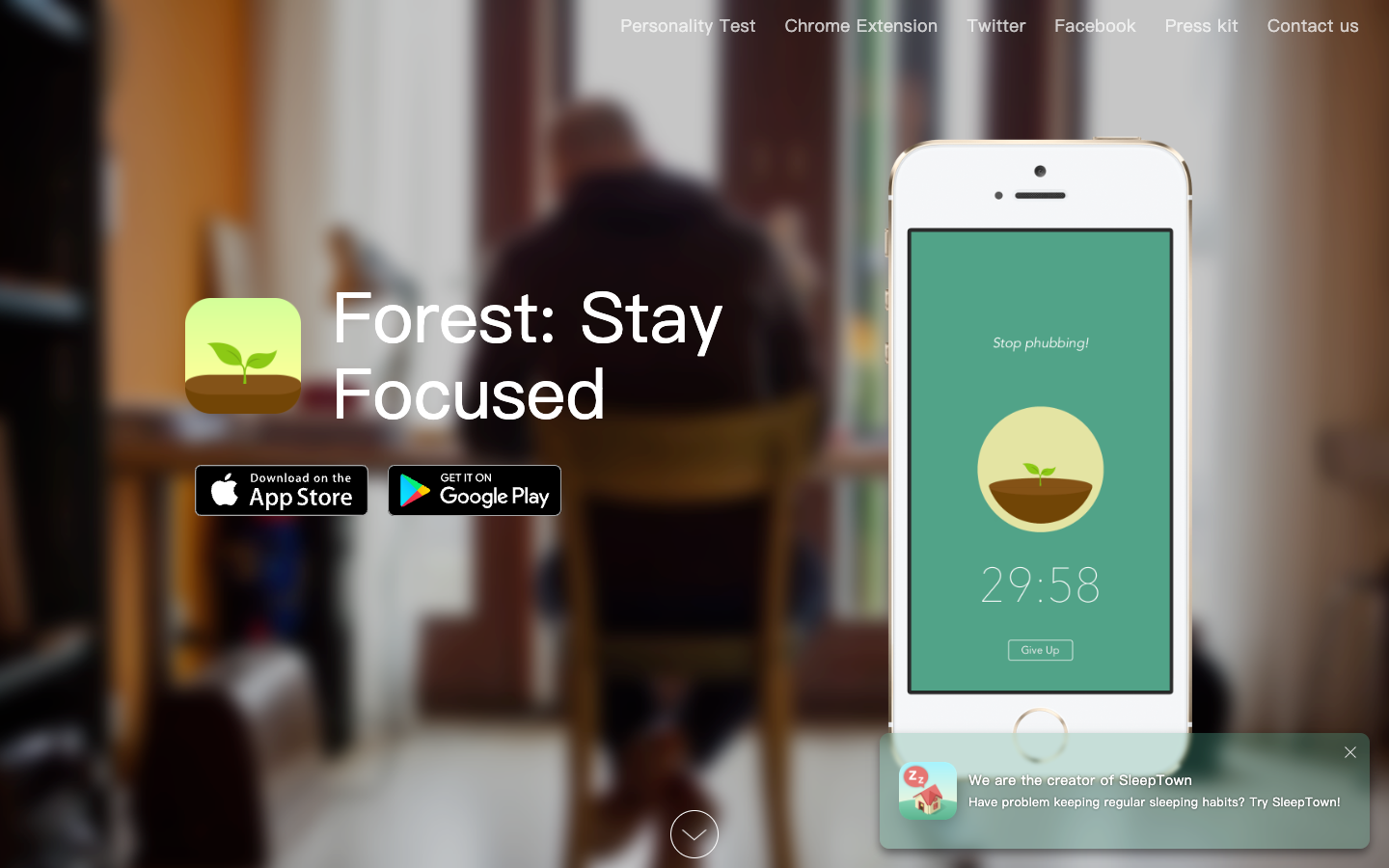
Forest is a gamified focus timer app. Plant a virtual tree when you begin a session. Leave the app and the tree dies. Completed sessions build a visual forest over time. Earned coins can be spent planting real trees through a partner organisation.
At a glance:
- Best known for: Gamified phone-away focus timer with real-world tree planting
- Main use case: Blocking phone distraction during defined work or study sessions
- Designed for: General users — widely used by ADHD community but not ADHD-specific
- Pricing: ~$3.99 one-time purchase on iOS. Free on Android. Premium subscription available for statistics and social features.
- Platforms: iOS, Android, browser extension (Chrome, Firefox)
- Downloads: 95 million globally as of 2026
Is Forest Good for ADHD?
Yes — for the specific problem it was built for. Its limits are just as specific.
Where it actually helps
The visual consequence addresses ADHD immediate motivation. ADHD motivation responds to immediate, concrete consequences rather than abstract future ones. A dying tree is a more immediate consequence than a vague deadline. For ADHD adults who know phone scrolling is a problem but can't stop through willpower alone, the visual stake shifts the calculation.
One-time setup, no ongoing system to maintain. Many ADHD focus tools require configuration and daily decisions that become their own overhead. Forest requires one decision: set a timer, press plant. The simplicity means it can be picked up after a gap without the re-engagement friction of more complex systems.
Social focus sessions. Forest's "Plant Together" feature allows synchronised sessions with a friend, adding a light social accountability layer to what's normally a solo tool.
Where it falls short for ADHD
Forest solves distraction — not initiation. The gap between deciding to work and pressing start in Forest is the same initiation gap that ADHD creates before every task. Forest helps once you've committed and started. If you're sitting with the app open and still can't begin, the timer is watching you not start.
Phone down doesn't mean work started. Plenty of ADHD adults have planted a Forest tree and then stared at the wall, opened a different device, started something completely different, or just sat there. Removing one distraction doesn't guarantee the task happens.
Novelty dependency. The gamification mechanic provides an initial engagement hook that many ADHD brains respond to intensely — and then habituate to. When the novelty fades, the same phone distraction pattern can return.
Six Alternatives Worth Trying
1. Inflow — For Understanding What's Upstream of the Phone Distraction
.png)
Forest keeps you off your phone during a session. Inflow helps you understand why the phone is so reliably the thing you reach for — and what the avoidance underneath it is actually about.
For many ADHD adults, phone distraction isn't the root problem. It's the symptom of task avoidance, which is driven by emotional patterns around the task: anxiety about failing it, shame about how long it's taken, overwhelm about where to start. Forest manages the symptom. Inflow addresses the pattern.
What's inside:
- CBT modules on procrastination, task avoidance, and the emotional patterns that make distraction so appealing
- Virtual coworking rooms — always-on body doubling that provides the social presence without requiring a Focusmate booking or a Forest timer
- Quinn, the AI support tool — available when you can't begin despite having the phone away and the timer set
- Community of ADHD adults who share the same experience of productivity tool success and productivity pattern failure
7-day free trial. Refund available within 7 days of first payment through Inflow's website.
Pricing: From $0.33/day (billed annually).
Platforms: iOS, Android.
Try it: Take Inflow's ADHD quiz to get started.
2. Focusmate — Social Accountability for Task Initiation
Focusmate pairs you with another person over video for a defined work session. Where Forest motivates you to stay off your phone, Focusmate motivates you to start and stay on task — through social presence rather than gamification.
For ADHD adults whose challenge is task initiation more than phone distraction specifically, Focusmate addresses the actual mechanism: another person's presence activates the ADHD motivation system in ways that a virtual tree cannot.
Best for: ADHD adults whose phone distraction is a symptom of task initiation difficulty — and for whom social accountability is more effective than gamification.
Pricing: Free (3 sessions/week). $8/month billed annually.
Platforms: Web only.
3. TickTick — Pomodoro Timer Attached to a Specific Task
TickTick is a task manager with a Pomodoro timer embedded in the task view. Where Forest starts a timer in isolation, TickTick starts a timer attached to a specific task — removing the gap between "I will focus" and "I know what I am focusing on."
For ADHD adults who use Forest but find themselves pressing start without knowing what to work on, TickTick addresses the adjacent problem.
Best for: ADHD adults who need task management and focus timing in one place — removing the decision gap between task list and focus session.
Pricing: Free tier. Premium $35.99/year (includes Pomodoro).
Platforms: iOS, Android, Web, Windows, Mac.
4. Tiimo — Visual Day Structure Around Focus Sessions

Tiimo is a visual daily planner for neurodivergent users. For ADHD adults who run Forest sessions but lose track of the day around them — which task to work on, how long they have, what comes next — Tiimo provides the day-level context that a session timer can't.
Best for: ADHD adults who use Forest effectively within sessions but struggle with time management and structure across the full day.
Pricing: Free tier. Pro ~$7–$12/month.
Platforms: iOS, Android, Web, Apple Watch.
5. Structured — Day Planning for When the Forest Timer Isn't Enough
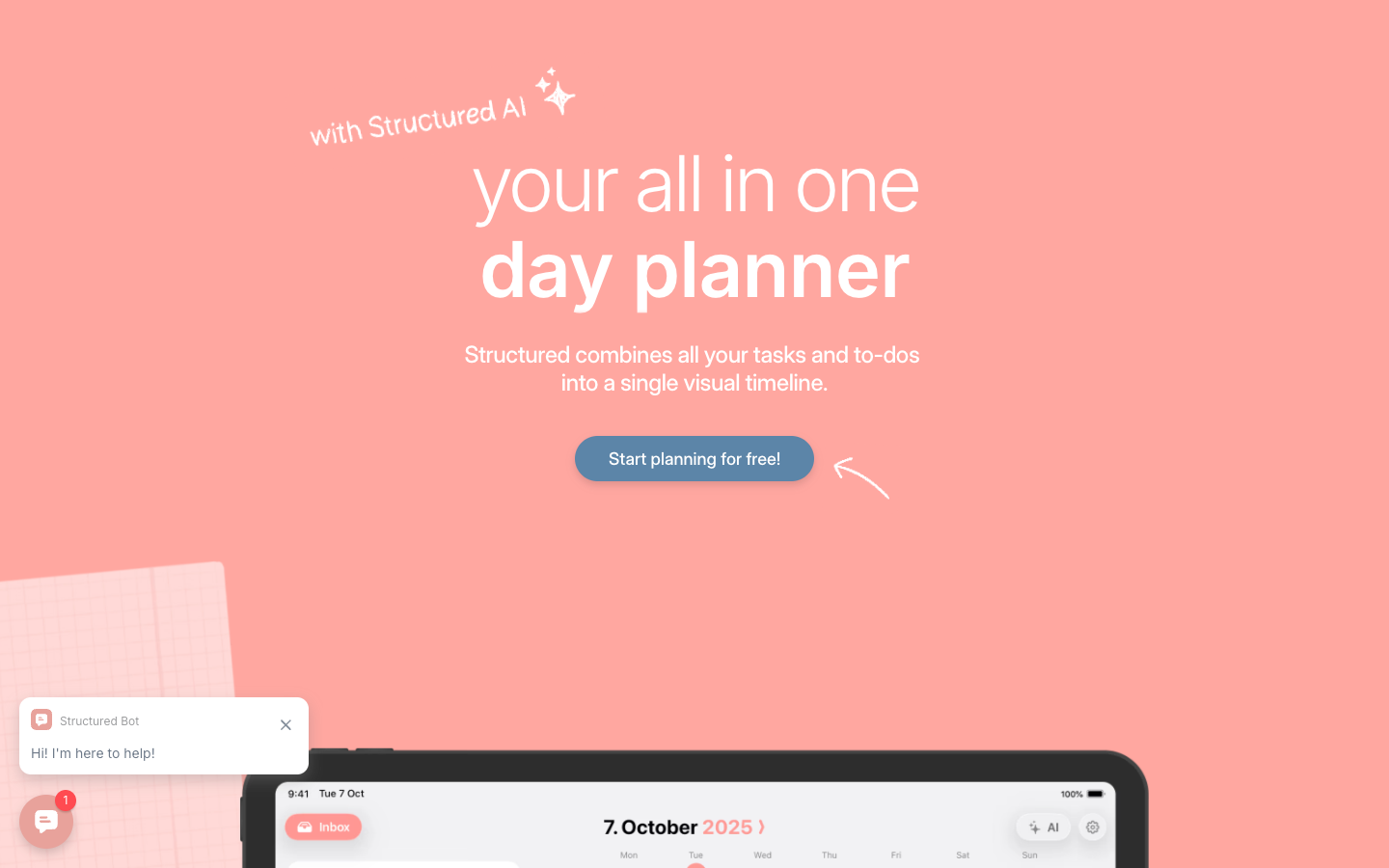
Structured is a visual day planner with calendar sync. For ADHD adults who schedule Forest sessions in advance and want to see how they fit within the broader day's commitments, Structured provides that visual context.
Best for: ADHD adults who want to plan Forest focus sessions as visible time blocks within their full day timeline.
Pricing: Free tier. Pro ~$19.99/year.
Platforms: iOS, Android, Web.
6. Wysa — Emotional Support When a Session Goes Badly
When a Forest session collapses — the tree died, the task didn't happen, the shame is loud — Wysa's free CBT check-ins address the thought patterns that turn one bad session into a written-off day.
Best for: ADHD adults who need emotional regulation support after a failed focus session — before the self-criticism spiral makes the next session harder to start.
Pricing: Free core tier.
Platforms: iOS, Android, Web.
Side-by-Side Comparison
How to Choose
Phone distraction during sessions is the primary problem. Forest. Simple, cheap, immediately effective for this specific challenge.
You use Forest but still can't initiate the task once the phone is away. Focusmate for social accountability, or Inflow to understand the avoidance pattern underneath. Take the quiz.
You want task and timer in one place. TickTick. No app switching between task list and focus timer.
You lose the day around individual sessions. Tiimo or Structured for day-level visual planning.
A session went badly and you need emotional support before trying again. Wysa. Free, conversational, always available.
Final Thoughts
Forest is an honest, affordable tool that does one thing well: it gives phone distraction an immediate visual consequence that ADHD brains respond to. At $3.99 one-time on iOS and free on Android, it's one of the lowest-risk tools on this list.
Where it reaches its limit is scope. Forest doesn't know why you're avoiding the task. It doesn't address what you're doing instead when the phone is face-down. And it can't help you start when the timer is ready but you're still not.
For the layer underneath phone distraction — the emotional patterns, the initiation difficulty, the avoidance — the tools above address what Forest can't.
Understand what's driving the avoidance
Take Inflow's free ADHD quiz to see what's actually getting in the way. 7-day free trial, refund available within 7 days of first payment through Inflow's website.
Frequently Asked Questions
Is Forest good for ADHD?
Forest can be genuinely helpful for ADHD adults whose primary focus challenge is phone distraction during work sessions. Its immediate visual consequence addresses the ADHD motivation system directly. Its limits are that it doesn't address task initiation difficulty, has no ADHD-specific content, and the novelty of the gamification can fade.
What is the best focus app for ADHD?
For phone distraction specifically: Forest. For task initiation through social accountability: Focusmate. For understanding why focus is consistently difficult: Inflow provides the CBT-based psychoeducation that focus tools can't.
Is Forest free for ADHD?
Forest is free on Android. On iOS, it's a one-time purchase of approximately $3.99. A Premium subscription with additional features and statistics is available separately.
Does Forest work for ADHD?
For the specific problem of phone distraction during sessions, yes — many ADHD adults report it as effective, at least initially. The gamification novelty can fade over time. And for ADHD adults whose main challenge is task initiation rather than phone distraction, Forest addresses the wrong problem.


