

6 Best Alternatives to Happier Meditation for ADHD

Sceptic-friendly mindfulness — but does it address ADHD?

Apr 9, 2026
8
 min read
Medically reviewed by
Table of contents:
Inflow vs Ten Percent Happier comparison — best ADHD alternatives to Ten Percent Happier

A quick note on naming: Ten Percent Happier rebranded to Happier Meditation in 2025. If you've been looking for Ten Percent Happier, you're in the right place — same platform, new name.

Happier Meditation exists because most mindfulness apps feel a bit too earnest for a certain kind of person — the kind who has read about meditation being effective, is interested in trying it, and is immediately put off by the ambient music and aspirational language. The app's original subtitle was "Meditation for Fidgety Skeptics." It knew its audience.

That audience overlaps meaningfully with ADHD adults. Not because ADHD brains are skeptical by nature, but because the evidence-first, direct, no-soft-glow framing tends to land better for brains that deflect from anything that feels like it's trying too hard.

This guide looks honestly at what Happier Meditation offers, where it works for ADHD, and six alternatives for different parts of the picture.

Looking for something that goes beyond mindfulness for ADHD?

Inflow's free ADHD quiz takes 2 minutes and matches you to a plan built for the ADHD patterns that meditation can reduce but not fully resolve.

What Is Happier Meditation?

Happier Meditation (formerly Ten Percent Happier) is a meditation and mindfulness app with a secular, science-forward approach. It features guided sessions from neuroscientists, Buddhist teachers, and longtime practitioners — and a large content library including courses, daily sessions, and a popular companion podcast.

At a glance:

  • Best known for: Secular, evidence-first approach to meditation; direct, honest teaching style
  • Main use case: Building a meditation practice through expert-taught sessions; stress, anxiety, and focus support
  • Designed for: Skeptical or analytically-minded adults — not built for ADHD specifically
  • Pricing: ~$99.99/year. 7-day free trial.
  • Platforms: iOS, Android, Web
  • Note: Rebranded from Ten Percent Happier to Happier Meditation in 2025.

Is Happier Meditation Good for ADHD?

For ADHD adults who've bounced off gentler meditation apps — Headspace felt too polished, Calm felt too ambient — Happier Meditation often lands differently.

Where it actually helps

The directness works for ADHD brains that deflect from soft framing. Happier Meditation acknowledges that your mind will wander, that you'll feel like you're doing it wrong, that some days it won't feel like anything. That honest framing is more engaging for ADHD adults who are looking for evidence they can trust rather than aspirational language to believe.

Podcast-style expert content engages ADHD attention differently. The interview-format content — conversations with researchers, teachers, and practitioners — provides more cognitive engagement than guided audio alone. For ADHD brains that tune out passive listening, the conversational format holds attention better.

The library is substantial. Courses on stress, anxiety, focus, sleep, and relationship — a wide range of ADHD-relevant topics taught through a lens that respects the user's intelligence.

Where it falls short for ADHD

Still primarily passive listening. Even with a more direct teaching style, the main format is audio — which requires sustained attention that ADHD brains reliably struggle to provide. The sessions are longer than Headspace, which is better suited to ADHD brains that tune out over time.

No ADHD-specific content or framework. The app doesn't know you have ADHD. The meditation techniques are valuable for emotional regulation broadly, but they don't address the specific patterns — executive dysfunction, rejection sensitivity, shame cycles — that ADHD produces.

At ~$99.99/year, it's the priciest meditation option. For ADHD adults who have a history of paying for apps they stop using, the financial commitment is worth considering carefully.

Six Alternatives Worth Trying

1. Inflow — ADHD-Specific Support That Goes Beyond Mindfulness

Happier Meditation teaches mindfulness to analytically-minded adults. Inflow teaches ADHD adults why mindfulness is hard to sustain with ADHD — and gives them the CBT-based tools that mindfulness approximates but can't fully replace.

The content covers what meditation can reduce but can't resolve: the shame cycles, the rejection sensitivity, the executive dysfunction patterns, and the very specific experience of knowing exactly what would help and still not being able to do it. Delivered in short, active, engaging daily modules — not passive listening.

What's inside:

  • CBT modules on ADHD-specific emotional and cognitive patterns — the upstream causes that mindfulness addresses at the surface level
  • Virtual coworking rooms — body doubling for the task initiation that meditation prepares you for but doesn't create
  • Quinn, the AI support tool — available 24/7 for real-time ADHD-specific guidance
  • Community of ADHD adults — peer connection that meditation apps, by design, are solo experiences

7-day free trial. Refund available within 7 days of first payment through Inflow's website.

Pricing: From $0.33/day (billed annually).

Platforms: iOS, Android.

Try it: Take Inflow's ADHD quiz to get started.

Want ADHD-specific support that goes deeper than meditation?

Take Inflow's quick ADHD quiz to get a personalized plan covering the executive dysfunction, rejection sensitivity, and shame cycles that mindfulness approaches but can't fully reach.

2. Headspace — More Structured, More Beginner-Friendly

Headspace is Happier Meditation's closest competitor. The key difference: Headspace is built around structured beginner courses, while Happier Meditation assumes you're approaching with existing interest and skepticism.

For ADHD adults who haven't tried meditation at all yet, Headspace's Basics course — short sessions, clear daily progression, no decision about what to do next — may be the more appropriate starting point.

Best for: ADHD adults new to meditation who want a clear, structured beginning point before navigating a larger expert content library.

Pricing: $12.99/month or $69.99/year. 14-day free trial on annual.

Platforms: iOS, Android, Web.

3. Calm — For Sleep and Ambient Support
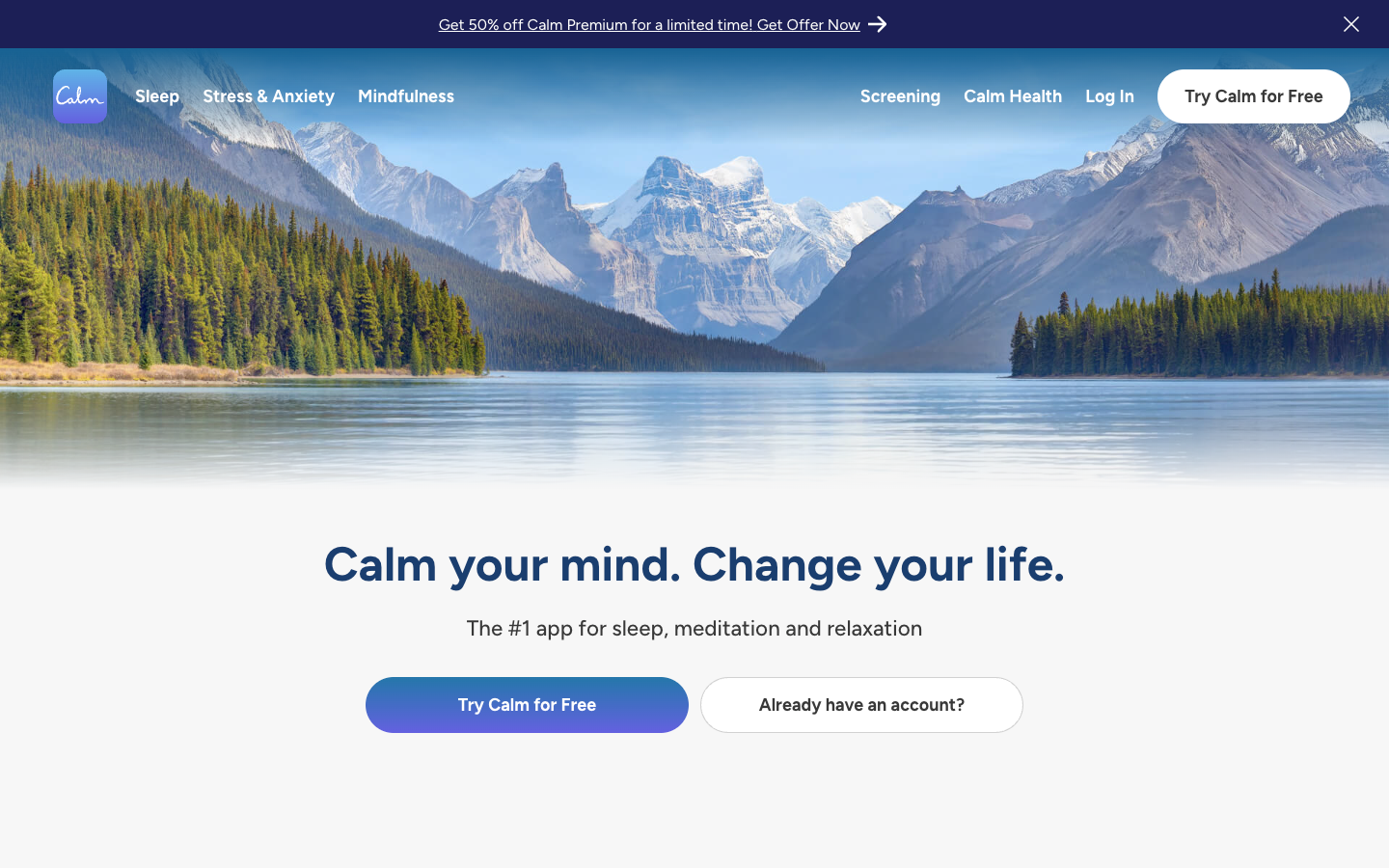
Calm takes a more ambient, less structured approach than either Headspace or Happier Meditation. Its Sleep Stories are particularly strong for ADHD adults who struggle with racing thoughts at night — one of the most consistent ADHD sleep challenges.

For ADHD adults who've tried Happier Meditation and found the content too intellectually engaging for bedtime winding down, Calm's ambient format serves a different purpose at a different time of day.

Best for: ADHD adults who want ambient sound and sleep support specifically — not structured meditation teaching.

Pricing: From $69.99/year (iOS). Web pricing may differ.

Platforms: iOS, Android, Web, Apple Watch.

4. Finch — The Low-Stakes Entry Point Before Meditation

Finch is a self-care app with a virtual pet bird. It asks almost nothing — small daily wellness goals, no performance standard, no judgment for missed days. For ADHD adults who want to build a daily self-care habit before attempting a full meditation practice, Finch provides the lowest-friction starting point.

Best for: ADHD adults who haven't been able to sustain any daily wellness habit yet — and need a gentler entry before attempting meditation.

Pricing: Free core version. Finch Plus ~$69.99/year.

Platforms: iOS, Android.

5. Focusmate — For When Meditation Prepares You But Doesn't Start You

Meditation prepares the emotional state. Focusmate gets the task started. For ADHD adults who meditate daily and still find task initiation reliably difficult — who are calmer but still can't begin — Focusmate's social accountability addresses what mindfulness can't.

Best for: ADHD adults who have a consistent meditation practice but still struggle with task initiation — and for whom external social presence is what actually gets work started.

Pricing: Free (3 sessions/week). $8/month billed annually.

Platforms: Web only.

6. Wysa — For the Emotional Patterns Meditation Doesn't Reach in Real Time

Wysa is a free AI-powered CBT chatbot. When ADHD emotional dysregulation hits in a moment that a meditation session can't address — because you're in the middle of work, in public, or at 2pm when sitting down to meditate is simply not an option — Wysa provides a two-minute conversational alternative.

Best for: ADHD adults with a meditation practice who need supplementary in-the-moment emotional support that doesn't require a dedicated session.

Pricing: Free core tier.

Platforms: iOS, Android, Web.

Side-by-Side Comparison

Happier Meditation Inflow Headspace Calm Finch Focusmate
ADHD-specific content
CBT-based framework
Evidence-first approach ⚠️
Structured beginner courses ⚠️ ⚠️
Sleep support ⚠️ ⚠️
Body doubling / accountability
Community ⚠️
No streak mechanics ⚠️ ⚠️
Free tier ⚠️ Trial ⚠️ 7-day ⚠️ Trial ⚠️ Limited
Pricing ~$99.99/yr From $0.33/day $69.99/yr From $69.99/yr ~$69.99/yr Free / $8/mo
Platforms iOS, Android, Web iOS, Android iOS, Android, Web iOS, Android, Web iOS, Android Web

How to Choose

You're drawn to meditation but put off by soft wellness aesthetics. Happier Meditation. The direct, evidence-first approach is its clearest strength.

You want ADHD-specific support that goes deeper than mindfulness. Inflow. CBT-based, built for ADHD patterns, with body doubling, community, and AI support. Take the quiz.

You're a complete beginner who needs clear structured guidance. Headspace. The Basics course is the most accessible starting point in the category.

Sleep is the main challenge. Calm. Sleep Stories outperform the competition for racing ADHD thoughts at night.

No daily self-care habit yet. Finch. Build the habit first, then layer in a meditation practice.

Meditation isn't translating into task initiation. Focusmate. Social accountability for the task itself.

Final Thoughts

Happier Meditation is a genuinely good app for its target audience. If you're an ADHD adult who has tried softer meditation apps and bounced, its directness and evidence-forward teaching style may be what finally makes meditation feel worth engaging with.

Its limits are the limits of all meditation apps for ADHD: passive listening, no ADHD-specific framing, no executive function tools, and a price point that requires real commitment.

If Happier Meditation has been your meditation experience and you want to go deeper into ADHD-specific support, Inflow covers the territory that mindfulness can reduce but not fully address.

Start where your ADHD brain actually is

Take Inflow's free ADHD quiz to find the support that fits your specific challenges. 7-day free trial, refund available within 7 days of first payment through Inflow's website.

Ready to go further than meditation can take you?

Ten Percent Happier builds a calmer mind. Inflow addresses the ADHD patterns underneath — the ones that stay even after the session ends. Start with the free quiz.

Frequently Asked Questions

Is Happier Meditation (Ten Percent Happier) good for ADHD?

The direct, skeptic-friendly approach works well for ADHD adults who deflect from softer meditation apps. The podcast-style content also holds ADHD attention better than guided audio alone. Its limitations are no ADHD-specific content, primarily passive listening format, and the highest price point in the meditation category.

Did Ten Percent Happier change its name?

Yes. Ten Percent Happier rebranded to Happier Meditation in 2025. It's the same platform, same content library, and same teaching approach — just with a new name and updated branding.

Is Happier Meditation worth it for ADHD?

At ~$99.99/year, it's the most expensive meditation app in the category. If the direct, evidence-forward approach is specifically what you're looking for and other apps haven't worked, the content quality is high. For ADHD adults who have a history of paying for apps they stop using, the 7-day free trial is worth using fully before committing.

What is the best meditation app for ADHD adults?

For beginners who need structure: Headspace. For skeptics who need directness: Happier Meditation. For ADHD adults who want to go beyond meditation into ADHD-specific skill-building: Inflow, which covers the patterns that mindfulness approximates but can't fully address.

Can't find the content you're looking for?

Send a topic request to the Inflow's blog editors. If we publish your topic idea, it could end up helping other people like you!
Request a topic
Send feedback

6 Best Alternatives to Happier Meditation for ADHD

Sceptic-friendly mindfulness — but does it address ADHD?

Inflow vs Ten Percent Happier comparison — best ADHD alternatives to Ten Percent Happier

A quick note on naming: Ten Percent Happier rebranded to Happier Meditation in 2025. If you've been looking for Ten Percent Happier, you're in the right place — same platform, new name.

Happier Meditation exists because most mindfulness apps feel a bit too earnest for a certain kind of person — the kind who has read about meditation being effective, is interested in trying it, and is immediately put off by the ambient music and aspirational language. The app's original subtitle was "Meditation for Fidgety Skeptics." It knew its audience.

That audience overlaps meaningfully with ADHD adults. Not because ADHD brains are skeptical by nature, but because the evidence-first, direct, no-soft-glow framing tends to land better for brains that deflect from anything that feels like it's trying too hard.

This guide looks honestly at what Happier Meditation offers, where it works for ADHD, and six alternatives for different parts of the picture.

Looking for something that goes beyond mindfulness for ADHD?

Inflow's free ADHD quiz takes 2 minutes and matches you to a plan built for the ADHD patterns that meditation can reduce but not fully resolve.

What Is Happier Meditation?

Happier Meditation (formerly Ten Percent Happier) is a meditation and mindfulness app with a secular, science-forward approach. It features guided sessions from neuroscientists, Buddhist teachers, and longtime practitioners — and a large content library including courses, daily sessions, and a popular companion podcast.

At a glance:

  • Best known for: Secular, evidence-first approach to meditation; direct, honest teaching style
  • Main use case: Building a meditation practice through expert-taught sessions; stress, anxiety, and focus support
  • Designed for: Skeptical or analytically-minded adults — not built for ADHD specifically
  • Pricing: ~$99.99/year. 7-day free trial.
  • Platforms: iOS, Android, Web
  • Note: Rebranded from Ten Percent Happier to Happier Meditation in 2025.

Is Happier Meditation Good for ADHD?

For ADHD adults who've bounced off gentler meditation apps — Headspace felt too polished, Calm felt too ambient — Happier Meditation often lands differently.

Where it actually helps

The directness works for ADHD brains that deflect from soft framing. Happier Meditation acknowledges that your mind will wander, that you'll feel like you're doing it wrong, that some days it won't feel like anything. That honest framing is more engaging for ADHD adults who are looking for evidence they can trust rather than aspirational language to believe.

Podcast-style expert content engages ADHD attention differently. The interview-format content — conversations with researchers, teachers, and practitioners — provides more cognitive engagement than guided audio alone. For ADHD brains that tune out passive listening, the conversational format holds attention better.

The library is substantial. Courses on stress, anxiety, focus, sleep, and relationship — a wide range of ADHD-relevant topics taught through a lens that respects the user's intelligence.

Where it falls short for ADHD

Still primarily passive listening. Even with a more direct teaching style, the main format is audio — which requires sustained attention that ADHD brains reliably struggle to provide. The sessions are longer than Headspace, which is better suited to ADHD brains that tune out over time.

No ADHD-specific content or framework. The app doesn't know you have ADHD. The meditation techniques are valuable for emotional regulation broadly, but they don't address the specific patterns — executive dysfunction, rejection sensitivity, shame cycles — that ADHD produces.

At ~$99.99/year, it's the priciest meditation option. For ADHD adults who have a history of paying for apps they stop using, the financial commitment is worth considering carefully.

Six Alternatives Worth Trying

1. Inflow — ADHD-Specific Support That Goes Beyond Mindfulness

Happier Meditation teaches mindfulness to analytically-minded adults. Inflow teaches ADHD adults why mindfulness is hard to sustain with ADHD — and gives them the CBT-based tools that mindfulness approximates but can't fully replace.

The content covers what meditation can reduce but can't resolve: the shame cycles, the rejection sensitivity, the executive dysfunction patterns, and the very specific experience of knowing exactly what would help and still not being able to do it. Delivered in short, active, engaging daily modules — not passive listening.

What's inside:

  • CBT modules on ADHD-specific emotional and cognitive patterns — the upstream causes that mindfulness addresses at the surface level
  • Virtual coworking rooms — body doubling for the task initiation that meditation prepares you for but doesn't create
  • Quinn, the AI support tool — available 24/7 for real-time ADHD-specific guidance
  • Community of ADHD adults — peer connection that meditation apps, by design, are solo experiences

7-day free trial. Refund available within 7 days of first payment through Inflow's website.

Pricing: From $0.33/day (billed annually).

Platforms: iOS, Android.

Try it: Take Inflow's ADHD quiz to get started.

Want ADHD-specific support that goes deeper than meditation?

Take Inflow's quick ADHD quiz to get a personalized plan covering the executive dysfunction, rejection sensitivity, and shame cycles that mindfulness approaches but can't fully reach.

2. Headspace — More Structured, More Beginner-Friendly

Headspace is Happier Meditation's closest competitor. The key difference: Headspace is built around structured beginner courses, while Happier Meditation assumes you're approaching with existing interest and skepticism.

For ADHD adults who haven't tried meditation at all yet, Headspace's Basics course — short sessions, clear daily progression, no decision about what to do next — may be the more appropriate starting point.

Best for: ADHD adults new to meditation who want a clear, structured beginning point before navigating a larger expert content library.

Pricing: $12.99/month or $69.99/year. 14-day free trial on annual.

Platforms: iOS, Android, Web.

3. Calm — For Sleep and Ambient Support

Calm takes a more ambient, less structured approach than either Headspace or Happier Meditation. Its Sleep Stories are particularly strong for ADHD adults who struggle with racing thoughts at night — one of the most consistent ADHD sleep challenges.

For ADHD adults who've tried Happier Meditation and found the content too intellectually engaging for bedtime winding down, Calm's ambient format serves a different purpose at a different time of day.

Best for: ADHD adults who want ambient sound and sleep support specifically — not structured meditation teaching.

Pricing: From $69.99/year (iOS). Web pricing may differ.

Platforms: iOS, Android, Web, Apple Watch.

4. Finch — The Low-Stakes Entry Point Before Meditation

Finch is a self-care app with a virtual pet bird. It asks almost nothing — small daily wellness goals, no performance standard, no judgment for missed days. For ADHD adults who want to build a daily self-care habit before attempting a full meditation practice, Finch provides the lowest-friction starting point.

Best for: ADHD adults who haven't been able to sustain any daily wellness habit yet — and need a gentler entry before attempting meditation.

Pricing: Free core version. Finch Plus ~$69.99/year.

Platforms: iOS, Android.

5. Focusmate — For When Meditation Prepares You But Doesn't Start You

Meditation prepares the emotional state. Focusmate gets the task started. For ADHD adults who meditate daily and still find task initiation reliably difficult — who are calmer but still can't begin — Focusmate's social accountability addresses what mindfulness can't.

Best for: ADHD adults who have a consistent meditation practice but still struggle with task initiation — and for whom external social presence is what actually gets work started.

Pricing: Free (3 sessions/week). $8/month billed annually.

Platforms: Web only.

6. Wysa — For the Emotional Patterns Meditation Doesn't Reach in Real Time

Wysa is a free AI-powered CBT chatbot. When ADHD emotional dysregulation hits in a moment that a meditation session can't address — because you're in the middle of work, in public, or at 2pm when sitting down to meditate is simply not an option — Wysa provides a two-minute conversational alternative.

Best for: ADHD adults with a meditation practice who need supplementary in-the-moment emotional support that doesn't require a dedicated session.

Pricing: Free core tier.

Platforms: iOS, Android, Web.

Side-by-Side Comparison

Happier Meditation Inflow Headspace Calm Finch Focusmate
ADHD-specific content
CBT-based framework
Evidence-first approach ⚠️
Structured beginner courses ⚠️ ⚠️
Sleep support ⚠️ ⚠️
Body doubling / accountability
Community ⚠️
No streak mechanics ⚠️ ⚠️
Free tier ⚠️ Trial ⚠️ 7-day ⚠️ Trial ⚠️ Limited
Pricing ~$99.99/yr From $0.33/day $69.99/yr From $69.99/yr ~$69.99/yr Free / $8/mo
Platforms iOS, Android, Web iOS, Android iOS, Android, Web iOS, Android, Web iOS, Android Web

How to Choose

You're drawn to meditation but put off by soft wellness aesthetics. Happier Meditation. The direct, evidence-first approach is its clearest strength.

You want ADHD-specific support that goes deeper than mindfulness. Inflow. CBT-based, built for ADHD patterns, with body doubling, community, and AI support. Take the quiz.

You're a complete beginner who needs clear structured guidance. Headspace. The Basics course is the most accessible starting point in the category.

Sleep is the main challenge. Calm. Sleep Stories outperform the competition for racing ADHD thoughts at night.

No daily self-care habit yet. Finch. Build the habit first, then layer in a meditation practice.

Meditation isn't translating into task initiation. Focusmate. Social accountability for the task itself.

Final Thoughts

Happier Meditation is a genuinely good app for its target audience. If you're an ADHD adult who has tried softer meditation apps and bounced, its directness and evidence-forward teaching style may be what finally makes meditation feel worth engaging with.

Its limits are the limits of all meditation apps for ADHD: passive listening, no ADHD-specific framing, no executive function tools, and a price point that requires real commitment.

If Happier Meditation has been your meditation experience and you want to go deeper into ADHD-specific support, Inflow covers the territory that mindfulness can reduce but not fully address.

Start where your ADHD brain actually is

Take Inflow's free ADHD quiz to find the support that fits your specific challenges. 7-day free trial, refund available within 7 days of first payment through Inflow's website.

Ready to go further than meditation can take you?

Ten Percent Happier builds a calmer mind. Inflow addresses the ADHD patterns underneath — the ones that stay even after the session ends. Start with the free quiz.

Frequently Asked Questions

Is Happier Meditation (Ten Percent Happier) good for ADHD?

The direct, skeptic-friendly approach works well for ADHD adults who deflect from softer meditation apps. The podcast-style content also holds ADHD attention better than guided audio alone. Its limitations are no ADHD-specific content, primarily passive listening format, and the highest price point in the meditation category.

Did Ten Percent Happier change its name?

Yes. Ten Percent Happier rebranded to Happier Meditation in 2025. It's the same platform, same content library, and same teaching approach — just with a new name and updated branding.

Is Happier Meditation worth it for ADHD?

At ~$99.99/year, it's the most expensive meditation app in the category. If the direct, evidence-forward approach is specifically what you're looking for and other apps haven't worked, the content quality is high. For ADHD adults who have a history of paying for apps they stop using, the 7-day free trial is worth using fully before committing.

What is the best meditation app for ADHD adults?

For beginners who need structure: Headspace. For skeptics who need directness: Happier Meditation. For ADHD adults who want to go beyond meditation into ADHD-specific skill-building: Inflow, which covers the patterns that mindfulness approximates but can't fully address.

Looking for support?

Inflow can help you thrive with ADHD and reach your full potential. Start your journey now by taking our quiz.

Take the quiz